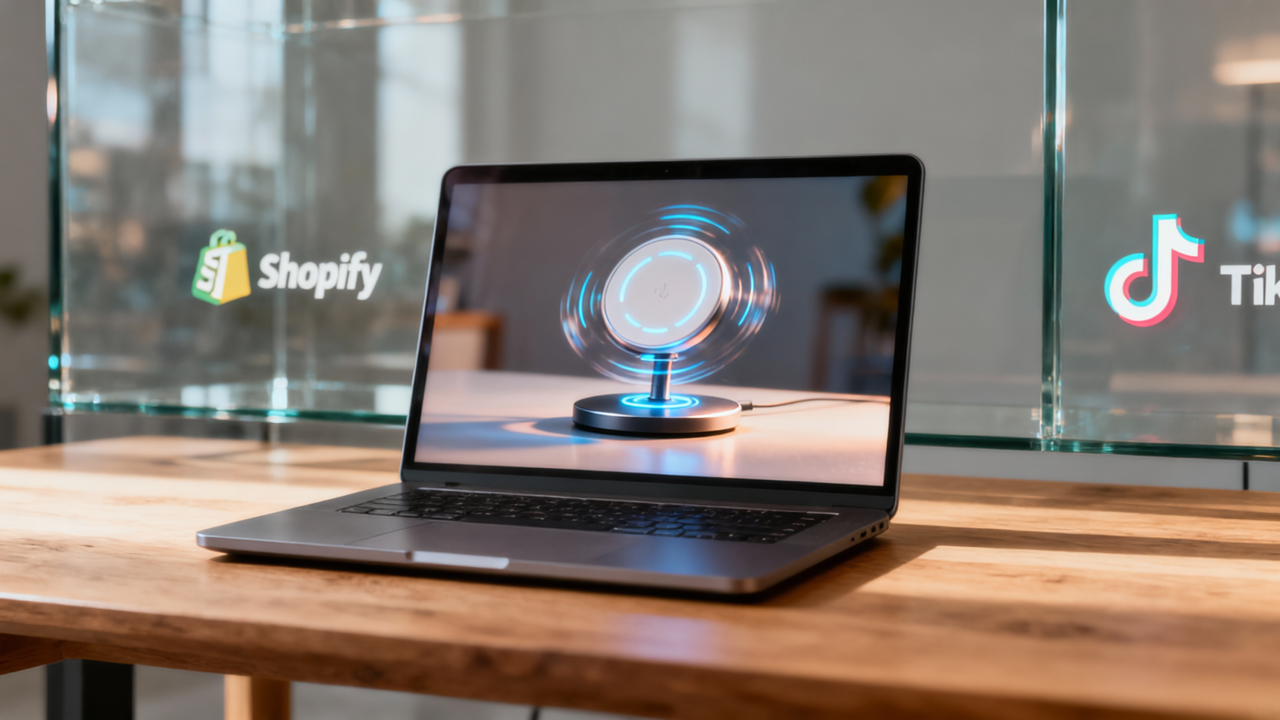
AI Product Video Generator: The Essential Tool for New Product Launches in 2026
Launching a new product in 2026 isn’t just about having a great idea—it’s about capturing attention *instantly*. With over 73% of online shoppers preferring video over static images (2026 Shopify Commerce Index), and TikTok Shop driving 41% of new-category discovery among Gen Z and Millennials, video is no longer optional. It’s the baseline.
Enter the **AI product video generator**: a category of tools that transforms product specs, text prompts, or even raw image assets into polished, platform-optimized videos—in minutes, not days.
Why Speed & Scalability Matter More Than Ever
In 2026, the average time-to-market for DTC brands has shrunk to 18 days—from concept to live storefront. That pressure doesn’t ease at launch: Amazon sellers now face algorithmic preference for listings with ≥2 video assets; Shopify merchants see +27% add-to-cart lift when homepage banners include motion; and TikTok Shop mandates at least one native vertical video per SKU to qualify for feed placement.
Traditional video production can’t keep up. A single 30-second hero video still averages $2,400–$5,800 in agency fees—and takes 10–14 business days from brief to delivery. For teams launching 5–12 SKUs per quarter? That’s unsustainable.
That’s where AI product video generators step in—not as replacements for creative direction, but as force multipliers for execution.
What Makes a Modern AI Product Video Generator Stand Out?
Not all AI video tools are built for commerce. Look for these four non-negotiable capabilities:
- **Ecommerce-native templates**: Pre-sized, platform-optimized outputs (e.g., 1080×1920 for TikTok Shop, 1080×1080 for Instagram Feed, 1920×1080 for Amazon A+ Content).
- **Product-first rendering**: Ability to ingest real product images, 3D mockups, or even plain-text descriptions—and generate accurate, lighting-consistent visuals without manual keyframing.
- **Brand-aligned customization**: Adjustable voiceover tone, on-brand color overlays, logo watermarking, and localized subtitle support (critical for cross-border launches in EU, SEA, and LATAM markets).
- **One-click repurposing**: Turn one master video into 5 platform-specific cuts—including auto-cropped variants, silent versions with captions, and thumbnail-optimized loops.
Tools that lack any of these often end up creating *more* work—not less.
Real Ecommerce Use Cases—From Launch to Scale
### ✅ Amazon Sellers: Beat the ‘Video Gap’
Over 62% of top-performing Amazon listings in Electronics and Home & Kitchen categories now include at least one video—but only 29% of *new* ASINs do within 72 hours of launch. An AI product video generator closes that gap. With Seedance 2.0, for example, sellers upload a white-background product photo + bullet-point features, select “Amazon A+ Video” mode, and receive a 22-second narrated loop in under 90 seconds—ready for upload to Seller Central.
### ✅ Shopify Brands: Dynamic Homepage & Email Banners
Static banners convert 3.2× lower than animated ones (2026 Recharge Conversion Benchmark). Instead of waiting for design rounds, brands using Seedance 2.0 generate scroll-stopping banner videos directly from CMS product data—pulling title, price, and variant info automatically. Bonus: output supports WebP animation and lightweight MP4 fallbacks for LCP optimization.
### ✅ TikTok Shop Sellers: Vertical-First, Sound-On Storytelling
TikTok’s algorithm favors native sound-on content. Rather than licensing music or hiring voice talent, creators use AI product video generators to produce authentic-sounding, conversational voiceovers—trained on regional dialects and shopping-intent phrasing. One skincare brand launched 17 SKUs across 4 markets in 3 days using Seedance 2.0’s multilingual script-to-video pipeline—with subtitles auto-synced and culturally adapted (e.g., emoji usage, pacing, gesture cues).
### ✅ Cross-Border Teams: Localize Without Re-Shooting
A beauty brand entering Germany, Japan, and Brazil skipped studio reshoots entirely. Using Seedance 2.0, they generated localized hero videos from one English source: swapping voiceovers, adjusting text hierarchy (right-to-left for Arabic variants), and adapting background motion to match regional UX preferences (e.g., slower transitions in mature markets, faster cuts in youth-forward feeds).
Beyond Video: How AI Generation Fits Into Your Broader Stack
AI product video generators don’t exist in isolation. They’re most powerful when integrated with other AI-powered assets:
- **AI image generation** handles hero shots, lifestyle composites, and flat-lays—then feeds those images into the video tool as scene assets.
- **AI copywriting tools** draft platform-specific scripts (e.g., “short, punchy, emoji-led” for TikTok vs. “feature-benefit structured” for Amazon).
- **CMS plugins** (like Seedance’s Shopify app) auto-trigger video generation when a new product is published—no manual uploads required.
The result? A unified, version-controlled asset pipeline—where every product gets consistent, high-fidelity video coverage from Day 1.
Choosing the Right Tool: What to Test Before You Commit
Before onboarding any AI product video generator, run this quick validation:
Seedance 2.0 passes all four—and adds real-time preview sharing so marketing, ops, and localization teams can approve before publishing.
Final Thought: Video Is Now Infrastructure
In 2026, video isn’t a ‘nice-to-have campaign asset’. It’s infrastructure—like responsive design or mobile checkout. The brands winning new product launches aren’t the ones with the biggest budgets. They’re the ones treating video like code: modular, reusable, versioned, and generated on demand.
An AI product video generator won’t replace your brand voice—but it *will* ensure that voice reaches more people, faster, and with higher fidelity than ever before.
Whether you’re prepping for Q2 Amazon Prime Day, testing a new SKU on TikTok Shop, or expanding into Southeast Asia, the right tool makes launch velocity inevitable—not aspirational.
Start small. Generate one video. Measure engagement lift. Then scale—not just your catalog, but your storytelling capacity.