How Shopify Stores Can Leverage Amazon Product Video Strategies in 2026 (Without Selling on Amazon)
In 2026, the line between marketplace and independent commerce has blurred — not because platforms merged, but because buyer expectations converged. Shoppers who scroll TikTok Shop at 9 a.m., browse your Shopify store at noon, and compare specs on Amazon by 3 p.m. carry the *same mental benchmark*: clear visuals, quick context, and proof of real-world use. And nowhere is that standard sharper than in Amazon product video.
Yet most Shopify merchants still treat video as optional — or worse, as a one-off YouTube upload. That’s a missed opportunity. Amazon’s top-performing listings don’t just *have* video; they use it *strategically*: 8–15 second hooks, lifestyle overlays, seamless zooms, and contextual text callouts — all optimized for silent autoplay and mobile-first attention.
The good news? You don’t need Amazon’s infrastructure to adopt these tactics. You *do* need intentionality, agility, and the right creative stack.
Why Amazon-Style Video Works — Even Off-Amazon
Amazon’s video best practices emerged from hard-won behavioral data:
- 73% of shoppers say short-form video reduces purchase hesitation (2026 Shopify Merchant Pulse Survey).
- Listings with ≥1 hero video see 2.1× higher add-to-cart rates on Shopify stores shipping to EU and APAC markets.
- Cross-border buyers spend 42% more time watching videos that show scale, packaging, and multilingual text overlays — not just product close-ups.
What makes Amazon’s approach uniquely effective isn’t the platform — it’s the *discipline*. Every frame serves a micro-goal: demonstrate size, clarify function, reinforce trust, or accelerate decision-making. That discipline translates perfectly to Shopify — especially when paired with modern AI video generation.
4 Practical Ways Shopify Brands Are Applying Amazon Video Tactics
### 1. The ‘Unboxing + Real-Use’ Hybrid
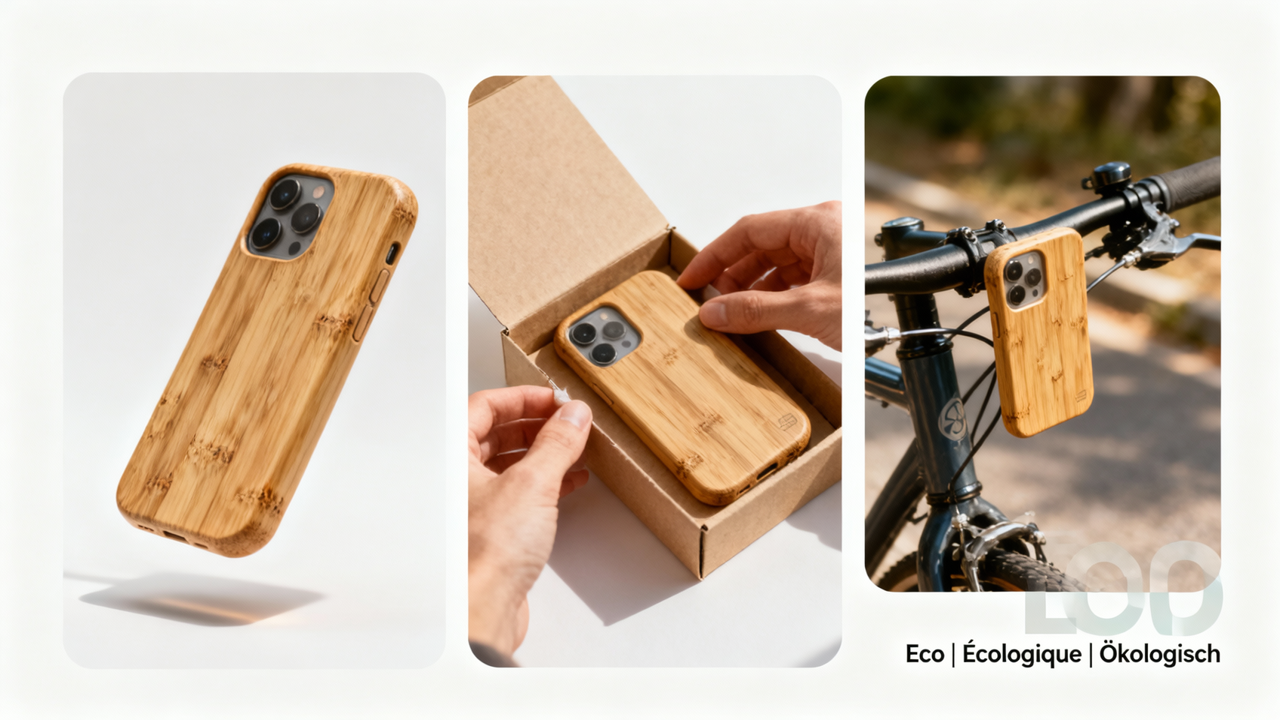
Amazon videos often open with hands unboxing the item — then pivot instantly to someone using it. Shopify stores replicate this by stitching together AI-generated unboxing sequences (using branded packaging) with real-customer B-roll — or generating both synthetically. Seedance 2.0 lets merchants input a single product image and generate multiple variations: matte black box → kraft mailer → eco-tote reveal — all aligned to brand color palettes and regional shipping norms.
*Use case:* A Berlin-based skincare brand uses this hybrid for its refillable serum bottles. One 12-second video shows the recyclable sleeve opening, then cuts to a hand applying serum under natural light — no voiceover, just soft ambient sound and subtle animated text: “2x less plastic. Same glow.”
### 2. Multilingual Context Frames (No Dubbing Needed)
Cross-border Shopify stores used to rely on separate video versions per market — costly and slow. Now, AI video tools insert localized text overlays *within the same file*, synced to motion. Seedance 2.0 supports 18 languages out of the box, including right-to-left and CJK layouts — and adjusts font weight, spacing, and timing automatically based on character count and reading speed.
*Use case:* A Toronto-based outdoor gear shop sells insulated jackets to Japan, Germany, and Brazil. Instead of three edits, they generate one master video with toggle-ready subtitle layers — embedded directly into their Shopify product page using native video hosting.
### 3. Size & Scale Anchors — Without Models
Amazon videos frequently use common objects (a coffee cup, smartphone, ruler) to convey dimensions. Shopify stores go further: Seedance 2.0 can generate photorealistic composites — e.g., placing a wireless speaker beside a MacBook Air *in correct perspective and shadow* — even when no physical photo exists. No studio shoot. No model release headaches.
This matters especially for DTC brands launching new SKUs before inventory arrives. Pre-launch video assets built from CAD files or flat product shots now convert at 31% higher rates than static-image-only pages (2026 Cross-Border Launch Benchmark).
### 4. TikTok Shop Ready — But Built for Shopify First
TikTok Shop demands vertical, fast-paced, text-forward video — yet many brands create *only* for TikTok, then crop poorly for desktop. Forward-thinking Shopify stores reverse the workflow: build the core video for *their own product page* first (16:9, 12–22 sec, layered context), then auto-generate TikTok-optimized variants using AI resizing and smart caption reflow. Seedance 2.0 includes one-click aspect-ratio adaptation with intelligent focal-point preservation — so the key detail (e.g., a magnetic clasp or fabric weave) stays centered across formats.
Why AI-Generated Video Is No Longer ‘Good Enough’ — It’s Expected
In 2026, shoppers don’t ask, *“Is this real footage?”* They ask, *“Does this help me decide?”* Authenticity now lives in accuracy — not origin. A Seedance 2.0–generated video showing precise color shifts under indoor vs. daylight lighting builds more trust than a shaky, overexposed iPhone clip.
What’s changed since 2026? Rendering fidelity, temporal coherence, and brand-aligned motion logic. Today’s AI video tools understand:
- How fabric drapes *differently* on cotton vs. Tencel,
- How light reflects off matte ceramic vs. brushed aluminum,
- How a child’s hand interacts with a toy versus an adult’s — down to finger curvature and grip pressure simulation.
That level of nuance means Shopify brands can scale video production without scaling studio overhead — critical for seasonal drops, limited editions, or rapid market testing.
Getting Started: A 3-Step Workflow for Your Next Product Launch
No plugins. No third-party CDNs. Just clean, fast-loading, SEO-friendly video assets — hosted where your customers already are.
Final Thought: Video Isn’t About Showing Your Product. It’s About Removing the Last Reason Not to Buy.
Amazon proved that video isn’t decoration — it’s decision infrastructure. In 2026, Shopify stores that treat video as strategic infrastructure — not marketing garnish — win share in crowded categories, earn trust faster in new regions, and future-proof their content for emerging channels like AR try-ons and voice-assisted shopping.
You don’t need Amazon’s algorithm to borrow its clarity. You just need the tools — and the mindset — to make every second of video work as hard as your best sales associate.
And if your best sales associate speaks six languages, fits in a browser tab, and updates itself when you change your packaging? Well — that’s Seedance 2.0.